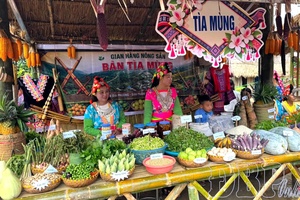
Spreading Hmông ethnic cultural identity

ĐBP - Following three days of vibrant proceedings, the 4th Hmông Ethnic Cultural Festival, 2026, has drawn to a close.

The festival left numerous impressions, contributing to honoring Hmông ethnic cultural identity, consolidating solidarity, and promoting the image of Điện Biên to domestic and international friends.

Resonant panpipe melodies blend with graceful dances and vibrant ethnic costumes, enlivening the joyous atmosphere at the Điện Biên provincial Hmông cultural space.

Within the cultural space of Đắk Lắk province, the chords of an electric guitar resonated alongside lyrics sung in the Hmông language by a young artisan. The performance prompted Lý Thị Kía to linger longer. For her, the intrigue lay not merely in modern musical instruments, but in how youth today utilize contemporary music to articulate the voice of their people. Pavilions representing 11 provinces turned the festival trip into a journey of cultural discovery.

A young artisan sings in the Hmông language accompanied by an electric guitar in the Đắk Lắk provincial cultural space.

Kía shared: “I visited many exhibition spaces; every booth was beautiful and offered something to learn. But I remember best the young artisan from Đắk Lắk, simultaneously accompanying himself on the electric guitar and singing in Hmông. It sounded novel yet intimately familiar. Seeing young people love the language and songs of their ethnic group and integrate them into modern life brings me immense joy.”

Meeting Lý Thị Ghếnh, who traveled from Na Sang commune and was attentively exploring the art of linen weaving in Tuyên Quang province’s cultural pavilion, one clearly felt her enthusiasm before the intricate stages of crafting traditional fabric. Ghếnh expressed: “Though we are all Hmông people, coming here allowed me to discover many distinct cultural facets of communities in other provinces. I enjoyed watching artisans weave linen with my own eyes the most. Witnessing their skillful, meticulous hands makes one realize how much labor goes into producing a beautiful piece of fabric. Visiting the festival is both joyful and educational, making me even prouder of our ethnic culture.”

Graceful Hmông dances in colorful traditional attire draw large crowds of locals and tourists.

The festival ambiance was palpable throughout three days of activities. At times, onlookers were drawn to panpipe melodies and graceful dances; at others, they paused at traditional craft exhibits to admire costumes featuring intricate needlework and patterns. Across sports arenas, cheers erupted alongside tug-of-war, stick pushing, tù lu, crossbow shooting, and pa pao contests.

Phú Thọ province’s cultural pavilion comes alive with traditional dances, adding festive colors to the celebration.

Having attended the Hmông Ethnic Cultural Festival twice, Nguyễn Thị Thủy, a delegate from Lào Cai province, noted that every participation brings valuable experiences. In her view, while sharing a common Hmông cultural identity, each locality retains unique nuances in attire, performing arts, and traditional customs. The festival enables delegations to interact, learn, and exchange approaches to safeguarding and promoting ethnic heritage. She was particularly impressed by Điện Biên province’s thoughtful organization and warm hospitality. Exchanges and meetings during festival days also serve to unite localities, creating renewed motivation to join hands in preserving traditional culture.

Hmông ethnic women of Nà Tấu commune, radiant in traditional attire, enjoy festivities and cultural exchanges at the festival.

Amid the crowds of attendees, artisans experienced their own sense of fulfillment, bringing forward knowledge transmitted across generations. Meritorious Artisan Sình A Tâu, from Sính Phình commune, was among six meritorious artisans presented with gifts by the Ministry of Ethnic Minorities and Religions in recognition of their festival contributions. He felt proud seeing Hmông culture widely showcased and embraced by locals and tourists. Yet, his lingering concern is ensuring these values do not cease once the days of performance conclude. According to him, those who master trades and understand customs must patiently transmit them so younger generations learn and practice; only then will panpipe tunes, handicrafts, and ancestral virtues continue to thrive in daily life.

Tourists take keen interest in learning the beeswax pattern drawing technique on linen from Hmông women, enjoying intimate and memorable festival experiences.

Following days of touring and experiencing the festival, Hà Huy Hoàng, a visitor from Hà Nội, was especially impressed by the rich diversity of activities. From Hmông panpipe arts performances, mass arts festivals, and ethnic costume showcases to spaces exhibiting linen weaving, pattern embroidery, and handicrafts from 11 provinces, each activity offered engaging experiences. Ethnic sports such as tug-of-war, stick pushing, crossbow shooting, tù lu, and pa pao also drew large crowds of spectators and supporters, generating a festive, animated atmosphere.

The “Linen Threads Tell Stories” exhibition space introduces linen weaving and traditional garments, contributing to honoring Hmông cultural identity at the festival.

What delighted Hoàng most was that the barrier between performers and audiences seemed to vanish. Visitors could stop to converse with artisans, learn how traditional items are made, immerse themselves in cultural exchanges, and share in the community’s joy. According to him, this close, vivid interaction enabled audiences to gain a clearer appreciation of the lifestyle, customs, and heritage preserved by the Hmông people across generations. The weekend trip thus became a memorable journey, leaving him with fond impressions of Điện Biên’s culture and people.

French tourist Philippe Le Goff (in grey shirt) poses for a commemorative photo with Hmông ethnic people at the Điện Biên provincial cultural space.

We encountered Philippe Le Goff, a 54-year-old tourist from France, as he stood contemplatively before the Điện Biên provincial Hmông cultural space. In conversation, he revealed that this marked his fifth visit to Việt Nam and his second time returning to Điện Biên. He considered himself fortunate that his journey coincided with the Hmông Ethnic Cultural Festival, allowing him to immerse himself in the celebratory atmosphere and explore the distinctive cultural nuances of highland communities.

Yet what inspired his deep affection for Điện Biên was also its mountain landscapes, hospitable people, and historical depth. He movedly shared: “I wanted to return here because the mountains and the people are truly wonderful. What makes it special is also the atmosphere, the history of Điện Biên Phủ. The first time I came here, I wept with emotion. Every time I return, I still feel very powerful emotions. I admire the Việt Namese people...”

Traditional bánh giầy pounding by the Hmông community draws enthusiastic spectators and supporters, adding to the festival’s lively atmosphere.

The festival has drawn to a close, yet the cultural values showcased, the encounters made, and the bonds forged among regional communities continue to be cherished and nurtured. The festival’s success affirms the care of the Party and State for preserving and promoting ethnic cultural identities; while awakening community pride and responsibility in safeguarding heritage, consolidating great national unity, and leveraging cultural resources to serve socio-economic development.

Tú Trinh

Comment

You have 500/500 characters left

Please enter 5 or more characters!!!

Recent news

  • 'Traditional sports spread cultural colors of Hmông ethnic group

    Traditional sports spread cultural colors of Hmông ethnic group

    CULTURE - SPORTS -
    ĐBP - Thrilling tug-of-war and stick-pushing matches, deft pa pao throws, the resonant buzz of tù lu spinning tops, and intense concentration in every crossbow shooting round... All came together to forge a distinct appeal for the sporting competitions at the 4th Hmông Ethnic Cultural Festival. Through each contest, traditional sports delivered exciting moments, captivating residents and visitors while helping spread the cultural beauty of the Hmông people.
  • 'Closing ceremony of 4th Hmông Ethnic Cultural Festival

    Closing ceremony of 4th Hmông Ethnic Cultural Festival

    CULTURE - SPORTS -
    ĐBP - On the evening of October 11, at Mường Thanh Walking Street in Điện Biên Phủ ward, the Ministry of Culture, Sports and Tourism coordinated with the Điện Biên provincial People’s Committee to organize the Closing Ceremony of the 4th Hmông Ethnic Cultural Festival, 2026. Following three vibrant days featuring distinctive activities, the festival concluded with great success, leaving profound impressions on local residents and tourists.
  • 'Điện Biên improves domestic water quality

    Điện Biên improves domestic water quality

    SOCIAL AFFAIRS -
    ĐBP - From invested and upgraded water supply facilities to pipeline systems extending into residential areas, Điện Biên is progressively bringing clean water closer to the people. Alongside expanding supply networks, the province prioritizes water resource protection, elevating treatment quality, and strengthening surveillance, aiming to ensure safe, stable domestic water sources and contributing to improved public health and quality of life.
  • 'Adding diverse experiences for visitors

    Adding diverse experiences for visitors

    TRAVEL -
    ĐBP - Điện Biên is refreshing its tourism offerings with experiences linked to indigenous culture, community life, border regions, and urban nightlife spaces. These new products not only provide visitors with more choices, but also offer more intimate perspectives on the land and people of Điện Biên, helping lengthen stays and heighten destination appeal.
  • 'The Party’s strong political will and wise leadership

    The Party’s strong political will and wise leadership

    NEWS - POLITICS -
    ĐBP - On October 10, 1949, the Lai Châu provincial Party Affairs Committee - now the Điện Biên provincial Party Committee - was established. This represented a milestone laying the groundwork for revolutionary movements across the locality to receive unified leadership.
  • 'Colors of Hmông ethnic traditional crafts

    Colors of Hmông ethnic traditional crafts

    CULTURE - SPORTS -
    ĐBP - Within the framework of the 4th Hmông Ethnic Cultural Festival, taking place from October 9 to 11 in Điện Biên, localities have brought forth craft demonstration spaces rich in identity. Every product and practical maneuver contributes to showcasing the cultural beauty and vitality of handicrafts preserved across generations by the Hmông people.
  • 'The joy of a grand cultural celebration

    The joy of a grand cultural celebration

    CULTURE - SPORTS -
    ĐBP - The lively sound of the Hmông khèn flute echoes through the mountains and forests of Điện Biên, blending with the excitement building ahead of the 4th Hmông Ethnic Culture Festival 2026. Artisans rehearse with passion, while villagers bustle about preparing to welcome visitors. Behind the flute’s rich, haunting melodies lies pride in ethnic identity and a heartfelt invitation to friends and travelers to join in the festivities.
  • 'Exciting sports competitions at 4th Hmông Ethnic Cultural Festival

    Exciting sports competitions at 4th Hmông Ethnic Cultural Festival

    CULTURE - SPORTS -
    ĐBP - Within the framework of the 4th Hmông Ethnic Cultural Festival, sporting events officially kick off on October 9. At this point, athletes from participating delegations are swiftly stabilizing their contingents, checking registration dossiers, and preparing uniforms and equipment, looking forward to spirited competitions.
  • 'Honoring cultural identity of Hmông ethnic group

    Honoring cultural identity of Hmông ethnic group

    CULTURE - SPORTS -
    ĐBP - The 4th Hmông Ethnic Cultural Festival in 2026 takes place from October 9 to 11 in Điện Biên province. Nearly 800 artisans, performers, and athletes from 11 provinces - including Tuyên Quang, Phú Thọ, Thái Nguyên, Sơn La, Cao Bằng, Lào Cai, Thanh Hóa, Nghệ An, Đắk Lắk, Điện Biên, and Lai Châu - gather together. This is not only a cultural celebration, but also an occasion to affirm the enduring vitality of ethnic identity within the nation’s developmental stream.
  • 'Hmông people take charge of their tourism future

    Hmông people take charge of their tourism future

    TRAVEL -
    ĐBP - Drawing on the cultural and natural assets embedded in everyday life, Hmông communities in Điện Biên province are gradually changing the way they think and work to develop community-based tourism. The transformation is reflected in their proactive efforts to improve their villages, preserve traditional culture and work together to protect the landscape and environment.